
Whey vs Plant Protein In India 2025 | which works better?
How to Choose the Right Protein Powder| Given Below
Whey vs Plant Protein: Which One Should You Choose in India?
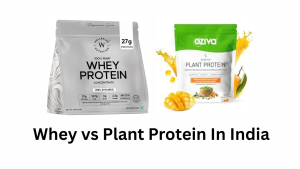
Quick answer Whey vs Plant Protein In India 2025
If you tolerate dairy and want the simplest route to fast recovery and muscle gain, choose a quality whey isolate. If you are vegan, lactose intolerant, or prefer gentler digestion and sustainability, pick a pea + brown rice plant blend or soy isolate. Both work when your total daily protein is on target.
Why protein powder is useful in India
Protein needs for active people usually range from 1.2 to 2.0 g per kg body weight. Many Indian diets lean carb-heavy and can fall short on protein. That is where a scoop or two of protein powder helps you hit your daily target without overhauling your whole diet. Powders are not magic, just convenient food that is easy to measure and carry.
What is whey protein? Whey vs Plant Protein In India 2025
Whey is the dairy fraction separated during cheese making. It is a complete protein with all nine essential amino acids and naturally high leucine, the amino acid that triggers muscle protein synthesis. You will see three main types on Amazon India:
Whey Concentrate: 70–80% protein, includes some lactose and milk fats. Budget friendly.
Whey Isolate: 85–90% protein, very low lactose and fat. Mixes clean, digests fast.
Hydrolyzed Whey: Pre-digested for the fastest absorption. Premium pricing.
Typical per 30 g scoop: 22–25 g protein, 1–4 g carbs, 1–3 g fat, about 2.5 g leucine.
Shop categories on Amazon India:
Whey protein all options: CHECK OUT ON AMAZO
Whey isolate: CHECK OUT ON AMAZON
Hydrolyzed whey: CHECK OUT ON AMAZON
Pros
Strong evidence for strength and hypertrophy
Higher leucine per scoop
Smooth taste and easy mixing
Wide flavor and size options
Cons
Not vegan
Concentrate may bother those with lactose intolerance
Quality varies by brand and seller
What is plant protein? Whey vs Plant Protein In India 2025
Plant protein powders come from peas, brown rice, soy, hemp, or blends. Modern blends are formulated to be complete by combining sources with complementary amino profiles.
Common sources and how they compare
Pea Protein: High in lysine, mild taste, generally easy on stomach.
Brown Rice Protein: Complements pea by adding methionine.
Soy Isolate: Complete profile on its own, neutral taste, high PDCAAS.
Hemp Protein: Adds fiber and omega-3 ALA but lower protein per scoop.
Typical per 30 g scoop: 20–24 g protein, 2–5 g carbs, 1–3 g fat, 1–3 g fiber, roughly 2.0–2.2 g leucine depending on blend.
Shop categories on Amazon India:
Plant protein: CHECK OUT ON AMAZON
Pea + brown rice blends: CHECK OUT ON AMAZON
Soy protein isolate: CHECK OUT ON AMAZON
Hemp protein: CHECK OUT ON AMAZON
Pros
Vegan and lactose free
Often gentler for digestion and skin
Extra fiber supports satiety
Lower environmental footprint per serving
Cons
Single-source powders can be low in one or two amino acids
Taste can be earthy if not flavored well
Slightly lower leucine per scoop than whey
Head-to-head comparison Whey vs Plant Protein In India 2025
| Feature | Whey Protein | Plant Protein |
|---|---|---|
| Source | Dairy | Pea, rice, soy, hemp, blends |
| Amino completeness | Complete | Complete if blended or soy |
| Leucine per scoop | ~2.5 g | ~2.0–2.2 g |
| Digestion speed | Fast | Moderate |
| Lactose | Yes (very low in isolate) | None |
| Vegan | No | Yes |
| Texture | Creamy, smooth | Can be earthy; blends smoother |
| Satiety | Good | Good to very good (fiber helps) |
| Typical price in India | Wide; isolates cost more | Often similar to isolates for premium blends |
| Best for | Post-workout muscle gain | Vegan diets, lactose intolerance, daily shakes |
Bottom line: Whey is slightly more efficient per scoop for muscle building, but a good plant blend or soy isolate closes the gap when you get your total daily protein right.
Muscle gain: which works better?
Both whey and plant blends help you gain muscle when training and total protein are on point. Whey isolate can have a small edge right after workouts because of higher leucine and fast digestion. If you choose plant, go for pea + brown rice or soy isolate and consider 1 to 1.5 scoops to match whey’s leucine content.
Post-workout picks to browse:
Whey isolate best-sellers: CHECK OUT ON AMAZON
Pea + rice blends: CHECK OUT ON AMAZON
Weight loss: what should you choose?
Protein helps control hunger and preserves lean mass during a calorie deficit.
Choose whey isolate if you want fewer carbs and fats per scoop.
Choose a plant blend if you like the extra fiber and fuller feeling.
Enjoy the one you can take consistently. Calorie deficit and steps per day matter more than brand.
Browse low-calorie options:
Low-carb protein powders: https://www.amazon.in/s?k=low+carb+protein+powder
High-fiber plant proteins: https://www.amazon.in/s?k=high+fiber+plant+protein
Digestion and skin
If you are lactose intolerant, a whey isolate is often fine because lactose is very low, but plant protein is the safer bet if you still feel bloated. Some people find dairy triggers acne; in that case, try plant protein for three to four weeks and monitor.
Sensitive-stomach ideas:
Lactose-free protein: https://www.amazon.in/s?k=lactose+free+protein+powder
Unsweetened plant protein: https://www.amazon.in/s?k=unsweetened+plant+protein
Sample daily plans
For muscle gain (example 75 kg person)
Target: 1.6–2.0 g/kg = 120–150 g per day
Breakfast: Paneer or tofu bhurji + roti
Post-workout: 1 scoop whey isolate or 1–1.5 scoops plant blend
Lunch: Chicken/soy curry + rice + salad
Snack: Curd or soy milk + peanuts
Dinner: Fish/paneer/legume bowl
For fat loss (same 75 kg person)
Target: 1.6 g/kg = ~120 g per day
One shake as a meal or snack: 1 scoop in water with ice
Base meals on dal, veggies, lean protein, salads
Keep a 20–25% calorie deficit and hit your steps
Taste and mixing tips
Use cold water or chilled milk/soy milk.
For plant protein, blend with banana, peanut butter, cinnamon, and ice for a smoother mouthfeel.
For whey, water post-workout keeps calories low.
Try sample sachets before buying a big tub.
Sampler searches:
Protein sample packs: https://www.amazon.in/s?k=protein+sample+pack
Easy decision framework
Choose Whey if you:
Tolerate dairy
Want the highest leucine per scoop
Prefer smooth taste and quick mixability
Choose Plant if you:
Are vegan or lactose intolerant
Want extra fiber and often better skin tolerance
Care about sustainability
Still unsure? Keep both. Use whey right after training and plant in breakfast smoothies or as an evening shake.
FAQs for Indian buyers Whey vs Plant Protein In India 2025
1) Can beginners take protein powder?
Yes. It is simply protein from food sources in powdered form. Start with one scoop daily and assess digestion.
2) Is whey isolate safe if I am lactose intolerant?
Most people tolerate isolate because lactose is very low. If you still feel bloated, switch to a plant protein.
3) Does soy protein affect hormones in men?
Research on normal human intakes does not show feminizing effects. If you like soy isolate, it is a fine choice.
4) What is the best time to take protein?
After workouts and between meals to hit your daily target. Timing helps, but total daily protein matters most.
5) How many scoops per day are okay?
Usually 1–2 scoops, with the rest from meals. Match your scoops to your daily gram target.
6) Which protein is best for weight loss?
Both work. Choose the one you can stick to. Whey isolate is low in carbs and fat per scoop. Plant blends often keep you fuller because of fiber.
7) What if whey gives me acne?
Try a plant blend or soy isolate for a month and observe your skin.
Final recommendation Whey vs Plant Protein In India 2025
If you want the fastest, simplest post-workout option and you tolerate dairy, buy a whey isolate: https://www.amazon.in/s?k=whey+isolate
If you want vegan or lactose-free comfort, buy a pea + rice blend or soy isolate:
Pea + rice blends: https://www.amazon.in/s?k=pea+rice+protein
Soy isolate: https://www.amazon.in/s?k=soy+protein+isolate
Set your daily target to 1.6–2.0 g per kg, train consistently, and you will make progress with either choice. Add your affiliate tags to the links above, or swap in your preferred product URLs after you pick brands you trust.